
The Supreme Court expressed dissatisfaction with the Centre's cap on anti-cancer drug trade margins, questioning why similar controls aren't applied to other medicines. The court highlighted significant markups on common drugs and medical devices, urging the government to expand its price regulation efforts and present modalities by October 27.
India's drug price regulator, NPPA, has revised downward the maximum retail price of 543 anti-cancer medicines, effective November 9. This follows an announcement enforcing trade margin rationalisation on 137 non-scheduled anti-cancer drugs, leading to significant price drops for several key brands.

'I have seen in Agra parents selling their buffalo, which is their sole source of livelihood, to buy expensive medicines to treat their child.' 'I was very moved by such cases and therefore approached the court to regulate the price of medicines in our country.'
The Supreme Court has questioned the Centre's decision to cap trade margins on anti-cancer drugs at 30 per cent, asking why similar restrictions could not be extended to other medicines and medical consumables, citing glaring disparities between procurement costs and maximum retail prices (MRPs).

The Delhi government's Drugs Control Department conducted extensive inspections, detecting numerous violations and seizing illegal medicines worth Rs 13.29 lakh. These efforts are part of a zero-tolerance approach against spurious and counterfeit drugs, aiming to ensure quality and safety standards in the national capital.

India's drug price regulator, the National Pharmaceutical Pricing Authority (NPPA), has significantly reduced the maximum retail prices (MRPs) of 543 cancer drug brands and pack sizes, with some reductions reaching up to 93 per cent. However, expensive innovator drugs from multinational corporations, including high-selling Bevacizumab and immunotherapy Keytruda, remain unaffected, highlighting limitations in the price control intervention.

A medical store owner in Surat was arrested for allegedly repackaging veterinary liver tonic and selling it as paediatric medicine at double the price, raising serious public health concerns. Police raided his store, seized materials, and registered an FIR.

PAPs can reduce expenditure by 30 to 60 per cent for some expensive immunotherapies and targeted therapies.

Surat Police have arrested a medical shop owner for allegedly repackaging veterinary feed supplement as paediatric medicine and selling it at a higher price. The accused transferred Himalaya Liv.52 Protec Liquid Veterinary Feed Supplement into smaller bottles and affixed counterfeit labels of Himalaya Liv.52 Drops, a product for children.
The Supreme Court has strongly criticised the Centre and pharmaceutical manufacturers over the significant disparity between the Maximum Retail Price (MRP) of medicines and their price to retailers, questioning the justification for such high margins and the perceived ineffectiveness of the National Pharmaceutical Pricing Authority (NPPA). The court reserved its verdict on petitions seeking strict price control and prevention of unethical overpricing of essential medicines.

The Indian government has decided to cap trade margins on all non-scheduled anti-cancer drugs at 30 per cent of their maximum retail price. This move aims to improve affordability and ensure continued availability of these life-saving medicines, potentially saving cancer patients an estimated Rs 2,500 crore annually. The decision, expected to be implemented later this month, will affect 110 anti-cancer drugs, including 35 patented ones.

The Supreme Court has strongly criticised the exorbitant markup on cancer drugs by hospitals, calling it "carnage" and "broad daylight dacoity." The court highlighted a case where a cancer drug was marked up ten times its retail price and urged the Centre to implement a uniform 16% margin on all medicines. It also raised concerns about hospitals forcing patients to buy medicines from their in-house chemists.


Buyers need to assess whether an OPD policy offers them enough usable benefits to justify the additional premium.

The directive comes amid concerns over steep mark-ups on medicines and medical consumables sold at hospital pharmacies.

'You have made a film which is rage bait so that more people will watch it and get incited.'

The IDBI Bank stake sale could generate over Rs 26,500 crore, helping the government surpass its annual divestment target, notes A K Bhattacharya.

More patients can now afford semaglutide, but the early excitement around the drug is fading.
'While higher prices may create some financial burden for patients and caregivers in the short term, uninterrupted access to treatment remains the greater priority.'

They had bought Rs 29,631 crore worth of shares in August.

Two Indian nationals have been charged in a US federal court for their alleged involvement in a transnational scheme to distribute counterfeit Ozempic, a popular diabetes drug. The scheme involved obtaining fake drugs from China, deceptive packaging, and continued even after FDA warnings, with the accused facing significant jail time if convicted.
Rajasthan Governor Haribhau Bagde highlighted ethanol's potential to protect India from volatile petroleum markets and geopolitical risks, advocating for its widespread production and use. He, along with other officials, emphasised ethanol's role in strengthening the rural economy, ensuring timely cane payments, and combating carbon emissions, while also discussing its historical context and current government support.
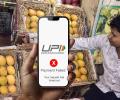
Former Haryana Chief Minister Bhupinder Singh Hooda has criticised the newly introduced fees on UPI payments, stating they will lead to increased inflation for the common man. He dismissed government claims that customers would not be burdened, arguing that merchants would pass on the costs. Hooda demanded the immediate withdrawal of these fees, highlighting that the government's move contradicts its 'Digital India' initiative.

Zoho co-founder Sridhar Vembu argues that predictions of AI's catastrophic outcomes are overstated and a global pause in AI development is improbable. He urges India to adopt an independent AI strategy, focusing on extensive foundational R&D across sectors, while remaining wary of market monopolisation attempts by major tech players. Vembu also highlights concerns about AI's impact on human judgment, skill development, and job markets, particularly for junior professionals.

India's pharmaceutical industry is experiencing increased bulk drug prices, particularly for APIs from China, following the escalation of the West Asia crisis in March. While current inventories provide a temporary buffer, concerns are mounting over the availability of key solvents and feedstocks, potentially leading to manufacturing disruptions and shortages in specific drug categories.

The 11-member Indian Pharmaceutical Alliance has frozen the prices of all decontrolled medicines until March 31, 2005, in view of high inflation.

The Small Animal Hospital, which provides world-class treatment to pets and strays alike, continues Ratan Tata's legacy.
A Parliamentary Standing Committee on Commerce has urged the Indian government to swiftly conclude the proposed India-US Bilateral Trade Agreement (BTA), while ensuring India's interests are protected, recommending complete exemption for key export products like generic medicines and smartphones from future US tariff increases.

Companies are investing heavily in complex injectables, respiratory therapies and biosimilars to improve margins and diversify portfolios.

'Hospitals sometimes compel patients to purchase medicines only from pharmacies owned by or attached to the hospital, refuse to provide prescriptions, withhold prescriptions, or send prescriptions directly to the hospital pharmacy without patient consent.'

Prime Minister Narendra Modi has highlighted the risks posed by the 'weaponisation' of resources and strategic sea routes, urging India to achieve greater self-reliance in energy to mitigate vulnerabilities to overseas supplies and geopolitical tensions.
Indian pharmaceutical companies are not rushing to relocate manufacturing to the United States despite former President Donald Trump's renewed threat of tariffs up to 200 per cent on imported generic drugs. Instead, they are leveraging existing US plants, contract manufacturers, and making selective investments in complex products while maintaining India as their primary production hub.

Indian pharmaceutical companies are strategically increasing investments in the US market, focusing on specialty drugs, complex generics, respiratory products, and local manufacturing, despite a nearly 10 per cent fall in exports to the US in FY26 due to pricing pressure and competition in traditional generics.

Here's decoding the fine print so that you know exactly what your health insurance policy covers, what it doesn't and the policy conditions that deserve your attention before you need to make a claim.

Companies are already diversifying sourcing, raising prices, and reworking operating models as the disruption drags on.
New patented products with significant therapeutic advantage over the existing ones may see higher pricing.

'Buy on dips, buy on dips and sell on rise.'
Recalling or relabelling medicines already in the supply chain before September 22 will not be mandatory, the finance ministry said on Tuesday, issuing a fresh set of frequently asked questions (FAQs) to address industry concerns following the announcement of goods and services tax (GST) revisions.
Danish pharma major Novo Nordisk on Friday launched its blockbuster type 2 diabetes treatment injection Ozempic, globally popular for its weight-loss benefits.
